




Dropped kerbs – something to watch out for
The purpose of a dropped kerb is to allow vehicles to cross the pavement to access a driveway or off-road parking space. You cannot alter or drive over it without legal consent.

The image above shows a dropped down kerb giving lawful access to the right-hand property. The owners of the house to the left are accessing their driveway illegally.
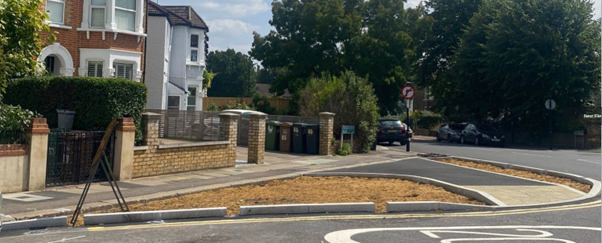
Sometimes it’s not so easy to work out if there’s a dropped down kerb.
From the image above, we can see that the kerb outside the house is a pedestrian crossing point with tactile paving, but we needed to ascertain whether this is also a vehicle crossover to ensure our client can access the driveway.
Pedestrian dropped kerbs are for wheelchairs, prams and accessibility – they are not for vehicle access. Using them to drive a vehicle over the footway and into a driveway would be unlawful under the Highways Act 1980, s 72 and s 184 (driving on the footway without proper authorisation).
Councils sometimes align pedestrian crossing points with driveways, but this does not automatically authorise driveway access, unless the council has formally approved the location as a dual-use vehicle crossover. If the council have formally approved it as a driveway access, then the homeowner would be able to lawfully use it, even if there is tactile paving.
If the above is a vehicle crossover, then it will be built with a reinforced sub-base and surfacing designed to take the weight of cars. Whereas a pedestrian drop is not designed like this and can be damaged by vehicles.
It is important to check with the local council as to whether the dropped kerb in question is licensed as a vehicle crossover. If not, the only legal way to resolve the issue is for the homeowner to apply to the council for a vehicle crossover/dropped kerb specifically for driveway access.
If accepted, the council may, adapt the existing dropped kerb to a full vehicle crossover (at the cost of the homeowner), or ask the homeowner to enter into a dropped kerb agreement to construct the crossover themselves in accordance with approved plans. Any such works must be undertaken by an accredited contractor under the New Roads and Street Works Act 1991.
Vehicle access crossings onto trunk or classified roads also require prior planning permission, whereas other roads may benefit from permitted development rights under the General Permitted Development Order (GPDO) in force at the time of construction.
How we can help
Our expert residential property team will provide you with clear, bespoke advice and move the sale or purchase of your property from inception to completion, seamlessly and efficiently.


 Download PDF
You may also be interested in
Latest thinking

Cyber Security and Resilience (Network and Information Systems) Bill: Key changes and implications

Property Perspectives – November 2025

AI training on trial: What Getty Images v Stability AI means for AI developers and copyright holders

Spades in the ground? Cranes in the sky? The real impact of the Autumn Budget on real estate

Autumn Budget 2025 – the impact on private individuals

Future Leaders festive quiz

Parents helping you buy a home: What happens when you separate?

AI and data show: December 2025

Deck the halls with natural value: The year-end planning round-up